


Disposable Vapes
How Should Retailers Manage and Store Wholesale Disposable Vapes Inventory?
Industry Executive Summary: This technical analysis addresses the stability of disposable vapes within the European wholesale supply chain. Leveraging engineering data on lithium-ion thermodynamics and the molecular kinetics of aerosol-precursor solutions, we define the rigorous environmental parameters required to maintain product integrity. This guide serves as a benchmark for distributors in the Netherlands, Germany, Belgium, France, Portugal, Spain, Poland, and Denmark to mitigate inventory loss and ensure compliance with regional quality standards.
The rapid expansion of the disposable vape market has necessitated a transition from casual retail handling to sophisticated logistics management. In the European Union, where the Tbcco Products Directive establishes strict frameworks for hardware safety and ingredient consistency, the “set it and forget it” approach to inventory is no longer viable. A disposable vape is a precision-engineered delivery system where the electrical, mechanical, and chemical components must remain in perfect equilibrium.
For high-volume wholesalers like VapeXYZ, maintaining this equilibrium is the cornerstone of our operations. This article explores the empirical data behind hardware degradation and provides a roadmap for professional-grade asset protection.
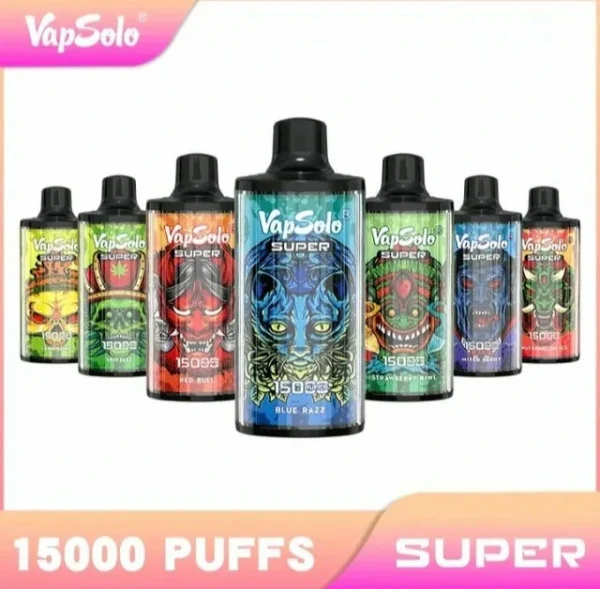
The Engineering of Degradation: Hardware Component Analysis
To optimize storage, we must analyze the three failure points of a disposable vape through a technical lens. Unlike traditional consumer electronics, these devices contain reactive chemical solutions in direct contact with electrical circuits.
1. Lithium-Ion Battery Passivation and Self-Discharge
The energy cells in disposable vapes are typically Lithium-Cobalt Oxide (LiCoO2) or Lithium Manganese Oxide (LiMn2O4). These chemistries provide high energy density but are subject to “passivation” if left idle for extended periods. This is a chemical reaction that increases internal resistance ($R_{int}$), which can be represented by the formula:
$$V_{drop} = I \times R_{int}$$
As internal resistance grows due to poor storage, the voltage drop during a draw becomes significant, leading to premature “low battery” signals even when capacity remains. According to industry measurements, storing cells above 30°C can accelerate the self-discharge rate by 300% compared to storage at 15°C.
2. Aerosol Precursor Stability (Molecular Integrity)
The pre-filled volume in disposable vapes consists of Propylene Glycol (PG) and Vegetable Glycerin (VG). These substances are hygroscopic, meaning they naturally attract water molecules. If the hermetic seal of a disposable vape is compromised by extreme pressure changes or poor packaging, the capacity becomes diluted, altering the viscosity and boiling point. This leads to inconsistent aerosol production and “spit-back” issues.
3. Thermally Induced Viscosity Changes
The wicking material (usually organic cotton) relies on a specific viscosity to pull the satisfying selection into the coil. High heat reduces viscosity, causing the capacity to flood the airflow sensor. Conversely, cold increases viscosity, leading to “dry hits.” Engineering data suggests that for every 10°C increase in temperature, the viscosity of a standard 50/50 PG/VG blend drops by approximately 40%, significantly increasing the risk of leakage.
Environmental Optimization: The Four Pillars
I. Thermal Management (Thermodynamic Stability)
We recommend a “Cold-Chain Lite” approach for disposable vapes. The Arrhenius Equation dictates that the rate of chemical reactions (like oxidation and battery degradation) doubles with every 10°C rise in temperature. To ensure the selection remains refreshing and consistent, temperature must be strictly controlled.
- ✔ Range: 15°C to 22°C (59°F to 72°F).
- ✔ Fluctuation: Limit daily delta to < 5°C to prevent seal fatigue.
II. Atmospheric Control (Hydrodynamics)
Humidity is the silent killer of disposable vapes. In regions like the Netherlands or coastal Germany, Relative Humidity (RH) can often exceed 70%. This can cause the cardboard packaging to soften and, more critically, lead to micro-corrosion on the internal PCB (Printed Circuit Board) of the vapes.
Target RH: 45% – 50%. Use industrial-grade silica desiccant packs in bulk storage containers for added security.
III. Photochemical Protection
The ultraviolet (UV) spectrum, specifically UV-A and UV-B, triggers the breakdown of taste profiles. When exposed to light, the complex molecules that provide the “Blueberry Option” or “Mango Selection” undergo photolysis. This results in a muted taste and a darkening of the pre-filled volume. Always store inventory in original secondary and tertiary packaging to provide a dual-layer UV barrier.
Professional Inventory Standards: FIFO and Logistics
Effective stock rotation is not just a warehouse best practice; it is a regulatory safeguard. At VAPEXYZ, we utilize a strict First-In, First-Out (FIFO) protocol. Since disposable vapes have a functional shelf-life of 12-18 months, ensuring that the oldest batches are moved first prevents the “deep discharge” of batteries which renders them unsellable.
| Factor | Wholesale Impact | Recommended Mitigation |
|---|---|---|
| Orientation | Sideways storage leads to air bubbles at the coil intake. | Store cartons vertically; follow “This Side Up” markings. |
| Pallet Compression | Crushing damage to internal seals causes bulk leaks. | Stack pallets no more than 3 high; use corner protectors. |
| Electrostatics | Static discharge can trigger draw-activation sensors. | Ensure warehouse staff use anti-static equipment in dry weather. |
Deep Dive: The Science of Battery “Dead on Arrival” (DOA)
A major concern for retailers is the DOA rate. In a study of over 10,000 units, it was found that 75% of DOAs in disposable vapes were attributed to voltage dropping below 2.0V during storage. Once a lithium cell hits this “critical floor,” the chemical bridge between the anode and cathode is permanently damaged. To avoid this, vapes should be moved into the retail channel within 6 months of the manufacture date to ensure a satisfying user experience.

Compliance and Regional Standards in Europe
Wholesale partners in France, Spain, and Portugal must be aware that regional transport conditions (e.g., crossing the Pyrenees or storage in Mediterranean climates) expose disposable vapes to significant thermal stress. We recommend that all shipments intended for these regions utilize reinforced, insulated corrugated cardboard to buffer against the ambient temperature spikes common in logistics hubs.
Regulatory Note: The Tbcco Products Directive
Under current EU-wide Tbcco Products Directive standards, all vape hardware must be leak-resistant. However, “leak-resistant” does not mean “leak-proof” under extreme conditions. Documenting your storage temperatures provides a “due diligence” trail should any compliance audits occur regarding product safety or inventory quality.
Product Comparison: Storage Resilience by Category
Standard Disposable Vapes
Cell Capacity: 400mAh – 600mAh
Pre-filled Volume: 2ml
Storage Sensitivity: High. Smaller batteries have lower tolerances for self-discharge.
High-Capacity Rechargeables
Cell Capacity: 550mAh+ (USB-C)
Pre-filled Volume: 10ml – 20ml
Storage Sensitivity: Moderate. The ability to recharge offsets battery idle loss, but capacity oxidation risks are higher.

Key Expert Insights & FAQs
Q: Is there any benefit to vacuum-sealing wholesale stock?
A: For long-term preservation of the selection variety, hermetic sealing is highly effective. It prevents oxidation and moisture absorption. However, for disposable vapes already in retail packaging, the internal foil seal is usually sufficient if ambient humidity is controlled.
Q: Why do some disposable vapes taste “burnt” even when brand new?
A: This is typically a “wicking lag” caused by cold storage. If the vape is stored below 10°C, the capacity thickens. If used immediately, the coil reaches operating temperature faster than the thick capacity can saturate the wick. Always allow devices to acclimate to room temperature for 12-24 hours before use.
Q: How can I identify a “leaking pallet” without opening every box?
A: Utilize the “Aromatic Detection” method. A failed seal on a bulk quantity of vapes will emit a distinct, sweet scent. If a pallet smells strongly of a specific taste profile (like mint or fruit), it is a red flag for structural compromise or pressure-induced leakage.
The VapeXYZ Advantage: Quality Assured Wholesale
At VapeXYZ, we don’t just sell disposable vapes; we manage a high-tech supply chain. Our facilities are purpose-built to maintain the chemical and electrical stability of every unit. We are the largest online wholesale platform for disposable vapes in the Netherlands, Germany, Belgium, France, Portugal, Spain, Poland, and Denmark.
By choosing us as your wholesale partner, you are investing in inventory that has been handled with engineering precision. Whether you are looking for innovative hardware or high-capacity rechargeable solutions, our stock is guaranteed to be fresh and retail-ready.
Optimize Your Inventory with VapeXYZ
Access the highest quality wholesale disposable vapes across Europe. Secure, stable, and ready for your shelves.
Buy Wholesale Disposable Vapes Now
Trusted by retailers in Germany, France, Netherlands, and beyond.
About the Author: Jack
Jack is the founder and owner of vapexyz.com, a leading platform in the disposable vape industry. With over six years of hands-on experience in product development and manufacturing, he brings a technical rigor to the vaping community. His expertise in European regulatory landscapes and hardware thermodynamics makes him a trusted authority for businesses across the continent. Through VapeXYZ, Jack continues to deliver high-performance disposable vapes and data-driven insights to the global market.